Thespian Horror Festival 2025 has finally come to a close.
We received 21 entries from both radio and video drama categories. After the first round of elimination, 6 teams from video drama category and 3 teams from radio drama category made it to the final round.
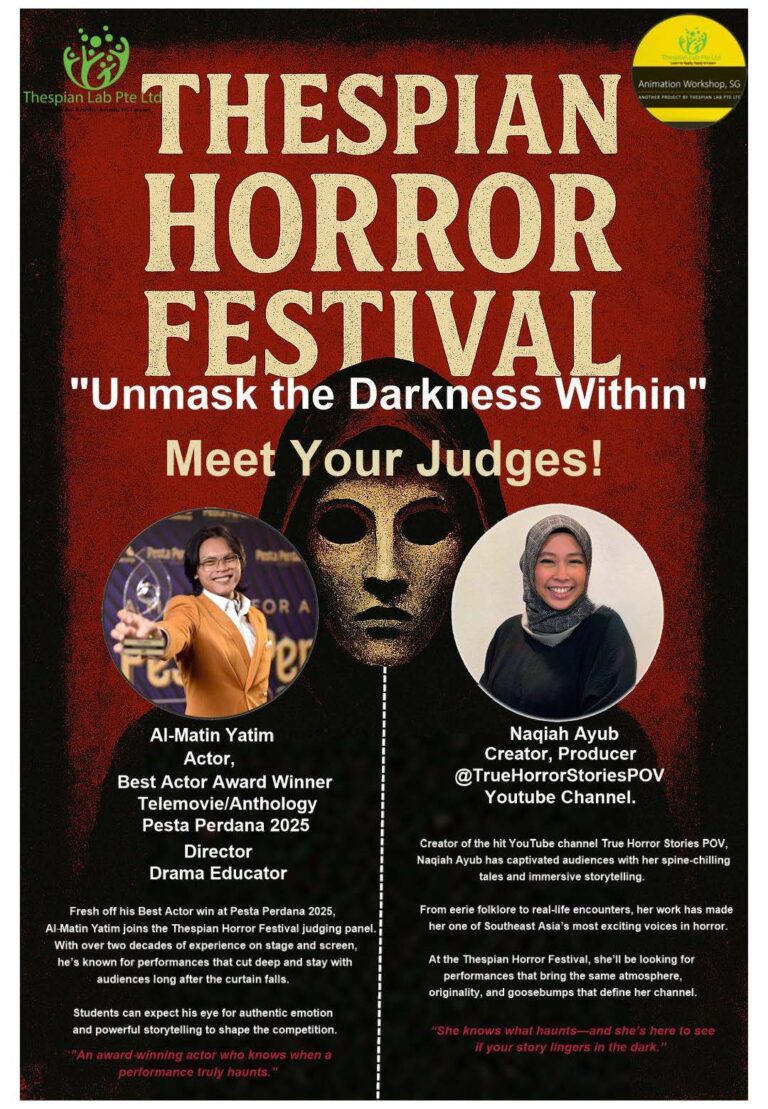
We are proud to have 2 celebrity judges to score these finalists and give feedback to the respective teams.
Al-Matin Yatim – Actor and Winner for the Best Actor Award in Telemovie/Anthology Category from Pesta Perdana 2025.
Naqiah Ayub – Creator and Founder of True Horror Stories POV Youtube Channel.
Firstly, Congratulations to all teams that made it to the submission stage. This is the hardest part from a student’s perspective because it is a student-led project; teachers and instructors will leave it entirely to these students to follow up and follow through.
And it makes it even harder since this event is held after their final-year exams, and it is left to the students and their leaders to rally the team and work on this project until submission.
For those who made it, you have shown a strong sense of responsibility, leadership, and character.
And to all the finalists, congratulations to you. That extra effort you put in has brought you and your team to the finals.
And to the Winners of Thespian Horror Festival 2025, congratulations to you.
You have created a production that is a cut above the rest.
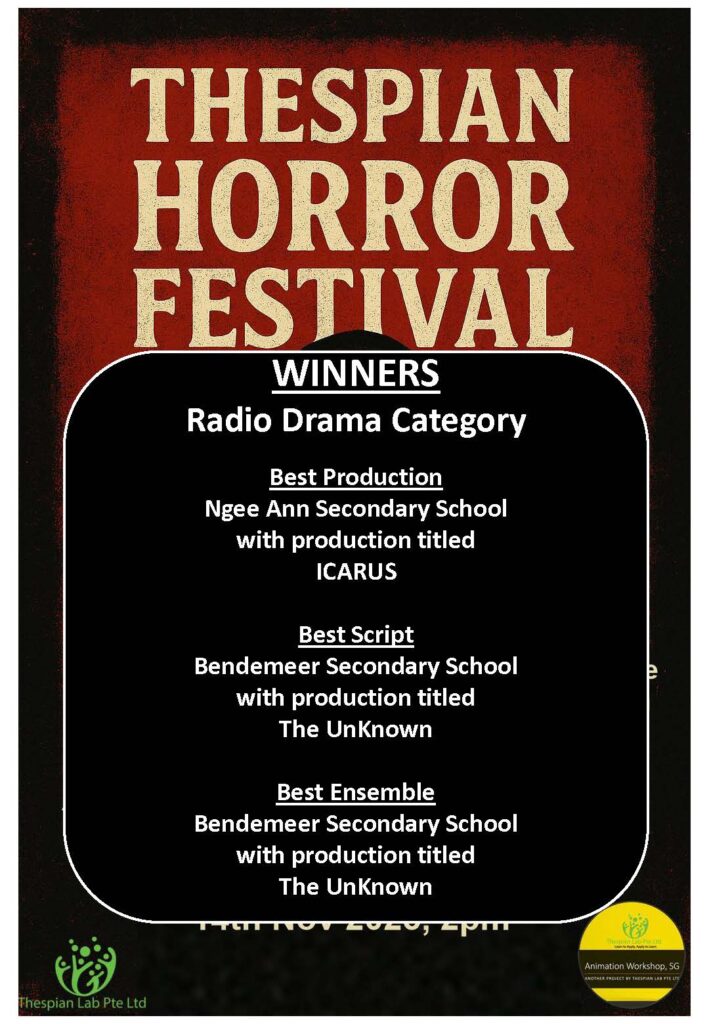
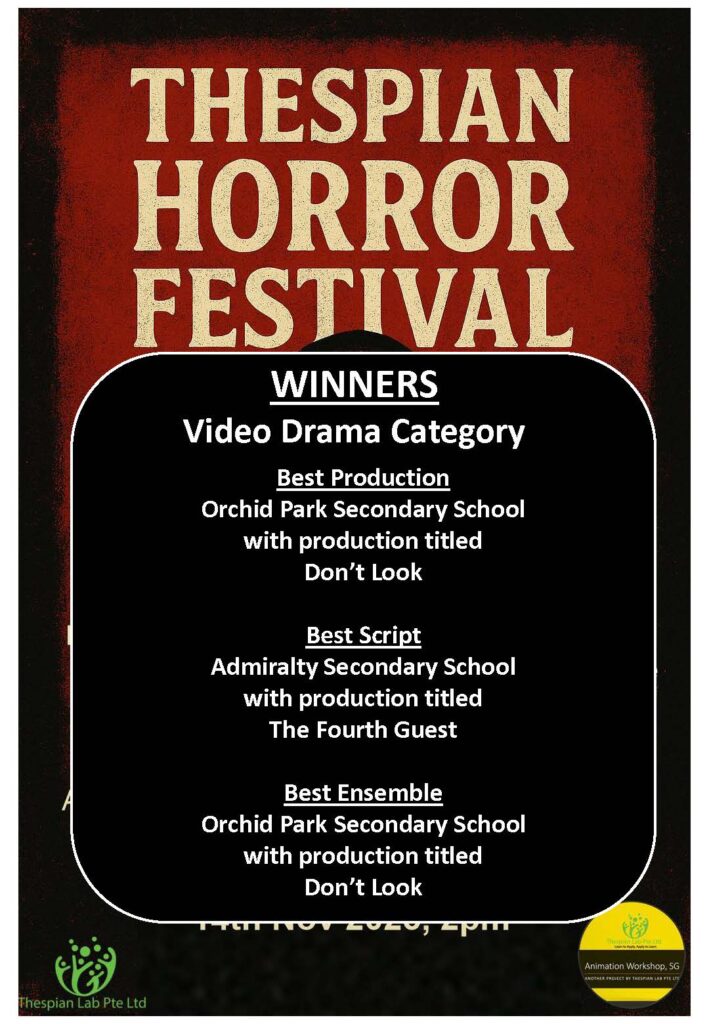
Here are some tips for you, students, if you want to excel in the next Thespian Horror Festival,
1. Lean into psychological horror, not just jump scares
– The strongest pieces unsettle the audience through tension, atmosphere, and character stakes.
– Encourage students to ask: What fear is my character wrestling with? What truth is this story exposing?
2. Build clear, motivated characters
– Horror works best when we care about the people in danger.
– Students should define:
– What the character wants
– What they fear
– What they’re hiding
– What they stand to lose
3. Use physicality with intention
– Horror thrives on body language: stillness, tension, breath, angles.
– Students can rehearse:
– Slow, deliberate movements
– Sudden shifts in energy
– Ensemble coordination for creature-like or supernatural effects
4. Master vocal control
– Whispering, breath work, vocal texture, and silence can be more terrifying than shouting.
– Students should explore:
– Vocal layering (e.g., calm voice with trembling breath)
– Dynamic pacing
– Strategic pauses
5. Prioritize clarity over chaos
– Horror can get messy if students rely on noise, speed, or confusion.
– Clean blocking, clear storytelling, and purposeful staging make the fear sharper and more effective.
6. End with impact, not explanation
– Horror endings don’t need to tie everything up.
– A strong final image, sound, or unresolved question often leaves the deepest impression.
AND LAST BUT NOT LEAST, THE MOST IMPORTANT TIP OF ALL…
7. Read the submission requirements properly.
– Many teams lost points on incomplete submission, improper submission, and even failed to submit a complete registration form.